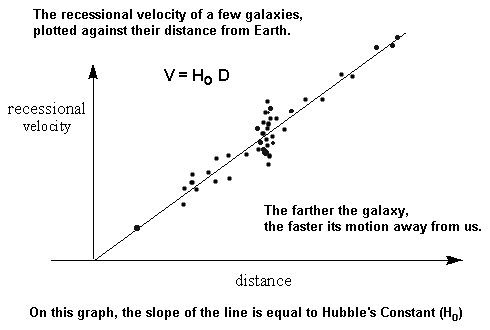
Hubble's Constant: H=v/d
Hubble's Constant:
H=v/d
Used to estimate the size and age of the Universe, the Hubble constant (H) is considered to be among the most important numbers in cosmology because it describes the rate of expansion of the universe. Despite the name, the Hubble constant, the numbers are never really literally constant since the rate of expansion would change over time, causing the number to change over time. To show that the Hubble constant is a value at the current or present time, it is often written with a 0 subscript.
Edwin Hubble discovered that nearly every galaxy seemed to be moving farther and farther away from our galaxy in 1929. The phenomenon he discovered is described as a galaxys spectrums redshift. The redshift has larger displacements for further galaxies, meaning the farther away a galaxy is, the quicker it is receding from planet Earth.
The Hubble constant is described as H=v/d with H as the current value of the Hubble constant, v as the galaxys radial outward velocity, and d as the distance of the galaxy from earth. The units used for the Hubble constant are kilometers per second per megaparsec (km/s/Mpc).
Determining an exact or true value for H is complicated, especially since it is dependent on the measurement of an exact radial velocity as well as an exact distance from Earth. The value of H is also dependent on a selected sample of galaxies far enough so that motions made from any gravitational influence will be relatively small.
The most recent Hubble constant value is approximately 500 km/s/Mpc or about 160 km/sec per million-light-years, the speed at which the universe is currently expanding.
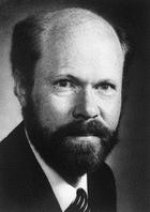
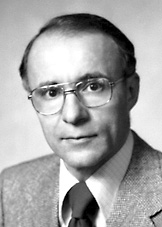
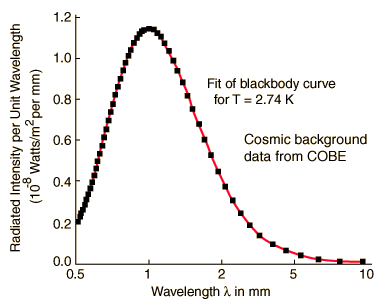
Robert W. Wilson and Arno A. Penzias
Robert Wilson and Arno Allen Penzias are the joint 1978 Nobel Prize winners in the field of physics. They,
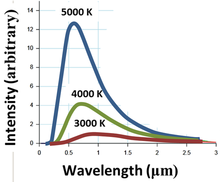
 made significant progress in the area of low temperature physics and discovered blackbody (or cosmic
 microwave) radiation. By using a 20 ft, horn shaped reflector dish, whose design emphasizes rejecting
radiation from the ground, they measured the temperature of space in the hopes a learning something about
the void called space. There initial results were troubling ,as described from Wilsons Nobel
lecture. The temperature was 3 to 5 kelvin above their theoretical calculations. After eliminating a
number of possible suspects, ranging from man made radiation in the atmosphere to aliens, Wilson and
Penzias discovered that the blackbody radiation actually came from space itself. by studying the velocity
of this radiation with respect to the doppler effect, one can prove that the universe is expanding.
microwave) radiation. By using a 20 ft, horn shaped reflector dish, whose design emphasizes rejecting
radiation from the ground, they measured the temperature of space in the hopes a learning something about
the void called space. There initial results were troubling ,as described from Wilsons Nobel
lecture. The temperature was 3 to 5 kelvin above their theoretical calculations. After eliminating a
number of possible suspects, ranging from man made radiation in the atmosphere to aliens, Wilson and
Penzias discovered that the blackbody radiation actually came from space itself. by studying the velocity
of this radiation with respect to the doppler effect, one can prove that the universe is expanding.
William Fowler
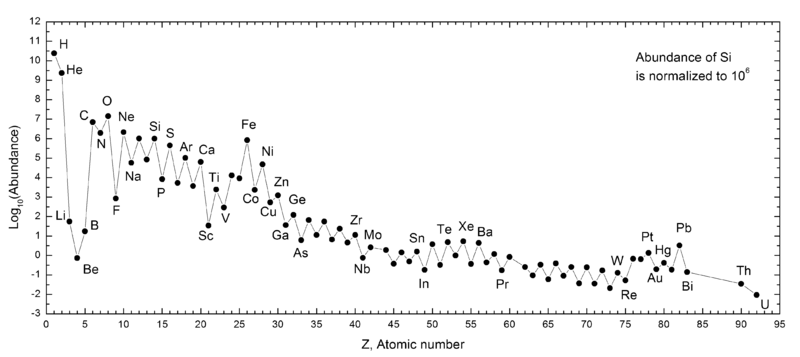
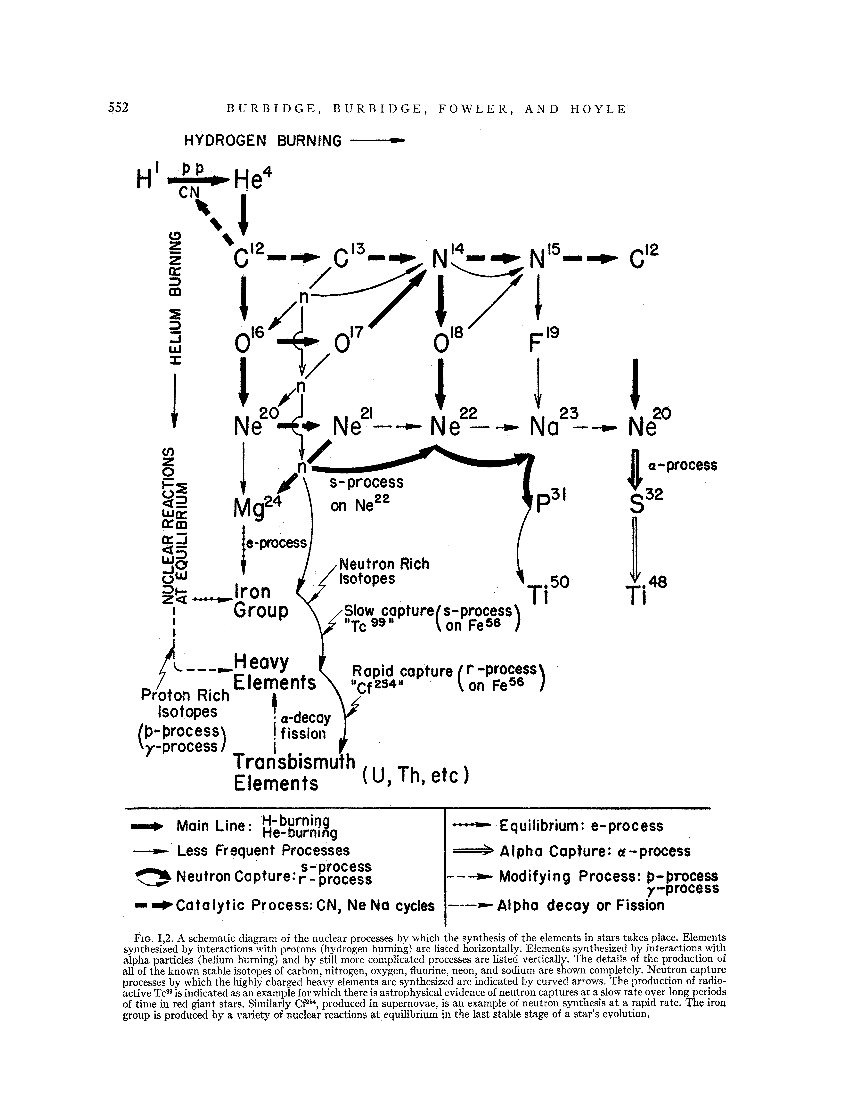
William Fowler studied the nuclear reactions within stars particularly how elements other than hydrogen
 and helium were produced within the stars fusion core after the big bang. To guide his theoretical
calculations, Fowler experimented with particle accelerators to gain an idea of what such fusion would
look like. His seminal paper Synthesis of the Elements in the Stars contains many pictorial references
to the process that each individual element would undergo in order to be synthesized from your standard
hydrogen and helium atoms. For his work, Fowler received the Nobel Prize in physics in 1983.
and helium were produced within the stars fusion core after the big bang. To guide his theoretical
calculations, Fowler experimented with particle accelerators to gain an idea of what such fusion would
look like. His seminal paper Synthesis of the Elements in the Stars contains many pictorial references
to the process that each individual element would undergo in order to be synthesized from your standard
hydrogen and helium atoms. For his work, Fowler received the Nobel Prize in physics in 1983.
Fine Structure Constant, Plank Length, Plank Time
Fine Structure Constant:
Though it has no application yet, and is dimensionless, the fine structure
constant is a fundamental constant in physics. If it differed up to 4% of
its current calculated value of 0.0072974, the universe would be vastly
different. We would not be alive because fusion would be incapable of
producing carbon.
Planck length: Planck length is equal to 1.616199(97) x 10^-35 meters.
Planck time: is the amount of time it takes light in a vacuum to travel one planck unit.
Possibly the smallest interval of time measurable.
Big Bang Theory
The big bang theory is the prevailing explanation on the origin of the universe. It states that the
Universe began in conditions of extreme heat and density, causing it to expand at a quick rate. The high
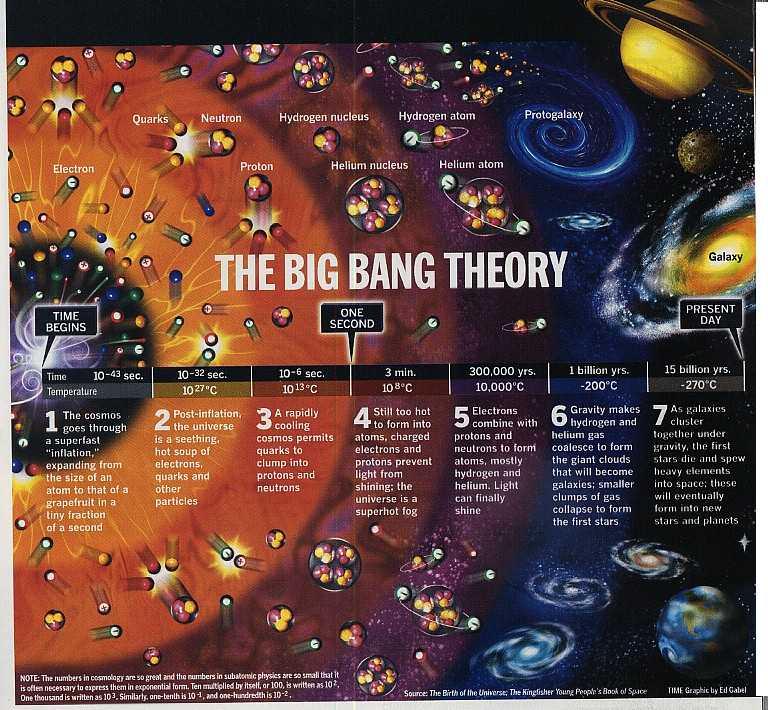 speed of expansion also cooled the Universe, allowing the Universe to constantly expand and it continues
to do so today. Due to the most recent measurements, it is believed that the Big Bang occurred about 13.7
billion years ago, making our Universe 13.7 billion years in age. This theory is centered around there
once being what is called a singularity, and then everything expanding from it suddenly. A singularity is
one spot, so small and compact, near the size of an atom, that held all the mass and energy in existence.
Once this singularity exploded, time began, and all the mass expanded rapidly. No stars, atoms, or
elements existed at the beginning. It wasnt until about 300,000 years after the initial expansion that
temperatures cooled enough to allow object to join together, creating atoms, then eventually over time,
elements.
speed of expansion also cooled the Universe, allowing the Universe to constantly expand and it continues
to do so today. Due to the most recent measurements, it is believed that the Big Bang occurred about 13.7
billion years ago, making our Universe 13.7 billion years in age. This theory is centered around there
once being what is called a singularity, and then everything expanding from it suddenly. A singularity is
one spot, so small and compact, near the size of an atom, that held all the mass and energy in existence.
Once this singularity exploded, time began, and all the mass expanded rapidly. No stars, atoms, or
elements existed at the beginning. It wasnt until about 300,000 years after the initial expansion that
temperatures cooled enough to allow object to join together, creating atoms, then eventually over time,
elements.
This theory explains why we see everything expanding and moving away from everything else. Everything is still moving away from the very center of the universe. This theory fails, however, to explain the origin of the singularity, or the possibility of there being one, so it does not satisfy everything we need from a theory.
Math and Physics:
| Physics | Math | Reasons |
| Classical Mechanics (Newton) and Electrodynamics (Maxwell) | Calculus | The Laws of Physics take on a simple form when expressed in terms of the infinitesimal changes of the variables and/or when expressed in terms of "point" objects. The superposition principle is applicable for many quantities. |
| General Relativity (Einstein) | Topology | Space plus time as 4 dimensional manifold. The equivalence principle. |
| Quantum Mechanics | Abstract Linear Algebra | Probablility and Interference (superposition) properties. Collective properties of identical particles. |